
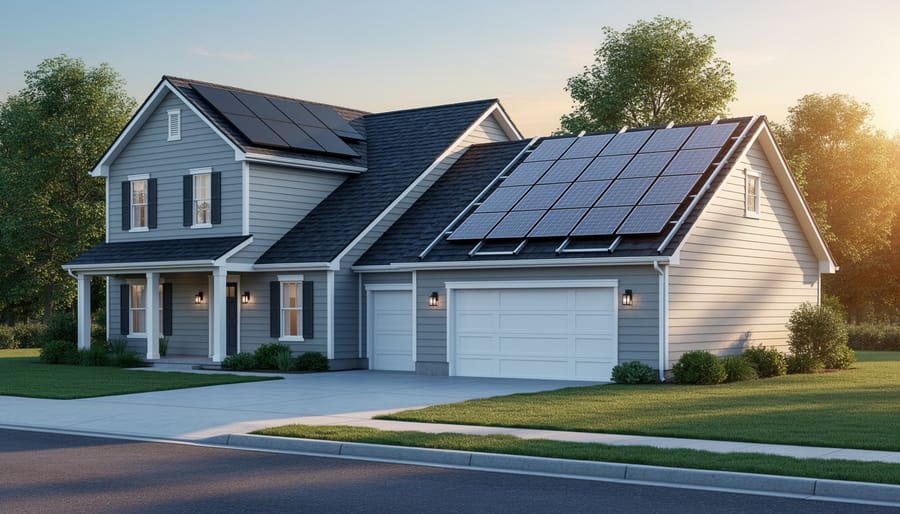
The solar energy decision you’re facing isn’t really about which technology is “better”—it’s about which solution aligns with your specific home, budget, and vision for sustainable living.
Photovoltaic shingles blend seamlessly into your roof, replacing traditional shingles with power-generating units that look like ordinary roofing material. Solar panels, on the other hand, mount on top of your existing roof as distinct rectangular modules. Both convert sunlight into clean electricity, but they differ dramatically in cost, installation requirements, aesthetics, and long-term value.
If you’re building a new home or planning a complete roof replacement, solar shingles offer an integrated approach that eliminates the layered look of traditional panels. They typically cost 20-30% more upfront but can offset expenses by serving as both your roof and your power system. Traditional solar panels remain the more economical choice for existing roofs in good condition, offering proven performance, easier installation, and faster return on investment.
Your choice impacts not just your energy bills, but your home’s appearance, resale value, and environmental footprint for decades. Understanding the practical differences between these technologies—from installation complexity to warranty coverage—empowers you to select the solar solution that truly fits your lifestyle. This comparison breaks down every critical factor you need to make a confident, informed decision that supports both your sustainability goals and your budget realities.
What Are Solar Shingles and How Do They Work?
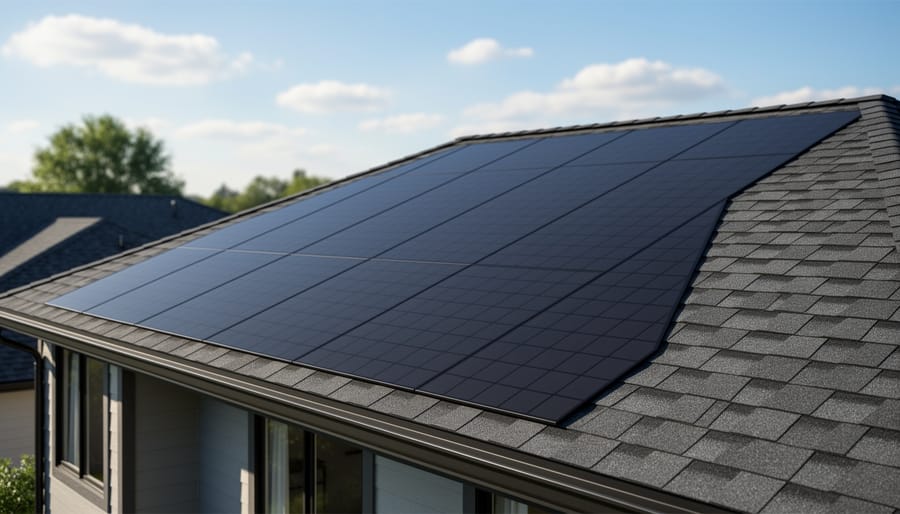
Solar shingles, also known as photovoltaic shingles, represent an innovative approach to home solar energy. Unlike traditional solar panels that mount on top of your existing roof, solar shingles actually replace your standard roofing materials. They’re designed to do double duty: protecting your home from the elements while simultaneously generating clean electricity from sunlight.
At first glance, solar shingles look remarkably similar to conventional asphalt or slate shingles. They’re designed to blend seamlessly with your roofline, creating a smooth, integrated appearance that many homeowners find more visually appealing than bulky panel systems. Each shingle contains small photovoltaic cells that capture sunlight and convert it into usable electricity for your home.
The installation process involves laying solar shingles just like traditional roofing materials, though they’re wired together to create a connected system. When sunlight hits the shingles, the photovoltaic cells generate direct current electricity, which then flows to an inverter that converts it into the alternating current your home appliances use.
One of the biggest advantages of solar shingles is their customization potential. You don’t have to cover your entire roof with them. Many homeowners choose to install solar shingles on south-facing slopes where they’ll capture the most sunlight, while using traditional shingles on shadier sections. This flexibility allows you to balance energy production with your budget and aesthetic preferences.
The sustainability benefits extend beyond clean energy generation. Since solar shingles serve as both your roof and your power source, they reduce material waste and can last for decades, making them an environmentally conscious choice that protects both your home and the planet.
What Are Traditional Solar Panels?
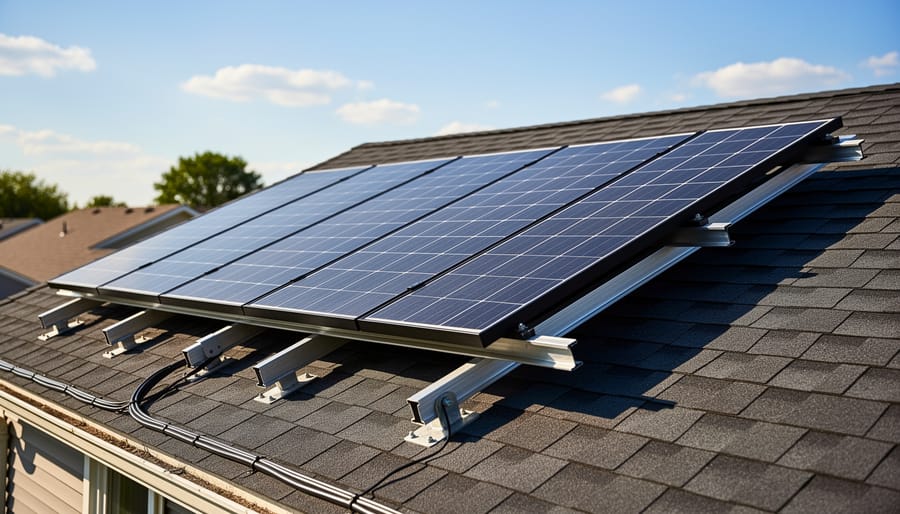
Traditional solar panels are the rack-mounted systems you’ve probably seen on rooftops throughout your neighborhood. These panels, also called photovoltaic (PV) modules, consist of multiple silicon solar cells encased in protective glass and aluminum frames. Each panel typically measures about 5.5 feet by 3 feet and sits on top of your existing roof structure.
Here’s how they work: When sunlight hits the solar cells, it triggers a reaction that generates direct current (DC) electricity. An inverter then converts this DC power into alternating current (AC) electricity that your home can use. Any excess energy can either be stored in batteries or sent back to the grid, depending on your setup.
Installation involves mounting a racking system onto your roof, which creates a small gap between the panels and your shingles. This spacing allows for air circulation, helping keep the panels cool and operating efficiently. The entire system sits several inches above your existing roof, which means your original roofing materials remain intact underneath.
Traditional panels have been the go-to choice for residential solar for decades, offering proven reliability and straightforward installation. They’re available in various sizes and efficiency levels, giving you flexibility to customize your system based on your energy needs, budget, and available roof space. This modular approach means you can start with a smaller system and expand it later as your energy goals or financial situation evolves.
Cost Comparison: Upfront Investment and Long-Term Value
Initial Installation Costs
When considering solar energy for your home, understanding the upfront investment helps you make an informed decision. Let’s break down what you can expect to pay for each option.
Traditional solar panels typically cost between $15,000 and $25,000 for an average-sized residential installation. This price includes the panels themselves, mounting equipment, inverters, and professional installation. The cost usually works out to around $2.50 to $3.50 per watt of generating capacity.
Photovoltaic shingles, on the other hand, generally run higher—expect to pay between $25,000 and $50,000 for a comparable system. The cost per watt typically ranges from $4.00 to $7.00, making them roughly 50-100% more expensive than conventional panels.
Why the price difference? Several factors contribute to the higher cost of solar shingles. First, the technology itself is more specialized and produced in smaller quantities, which affects economies of scale. Second, installation requires roofing expertise combined with electrical knowledge, meaning you’re paying for skilled labor in both trades. The process is also more time-intensive since each shingle must be individually placed and connected, unlike panels that mount on existing roofing.
The good news? Both options qualify for federal tax credits and many state incentives, which can offset 26-30% of your total costs. While solar shingles cost more initially, many homeowners find the seamless aesthetic and dual functionality of replacing an aging roof while adding solar capability makes the premium worthwhile for their specific situation.
Return on Investment and Payback Period
Understanding when your investment will pay for itself helps you make a confident decision between these two solar options. Both photovoltaic shingles and traditional solar panels generate energy savings, but their payback periods differ significantly.
Traditional solar panels typically offer a faster return on investment, usually paying for themselves within 6-10 years. Their lower upfront costs and higher efficiency mean you’ll see savings accumulate more quickly. Photovoltaic shingles, with their premium price point, generally take 10-15 years to break even, though you’re simultaneously investing in a complete roof replacement.
Several factors influence your specific ROI timeline. Your local electricity rates play a crucial role—higher rates mean faster payback periods for both options. Geographic location matters too, as sunnier climates generate more energy year-round. The available incentives in your area, including federal tax credits, state rebates, and utility programs, can dramatically reduce your initial investment and shorten payback time.
It’s helpful to calculate your ROI based on your unique situation. Consider that both options increase home value, with studies showing solar installations can boost property values by 3-4%. This added equity represents an immediate return that goes beyond monthly energy savings.
Remember, going solar isn’t just about dollars—it’s about reducing your carbon footprint and contributing to a cleaner energy future. The environmental returns begin the moment your system goes live, making every option a win for sustainability.
Aesthetics and Curb Appeal
When considering solar energy for your home, aesthetics often play a bigger role than you might expect. After all, you’ll be living with this decision for decades, and your home’s appearance matters both personally and financially.
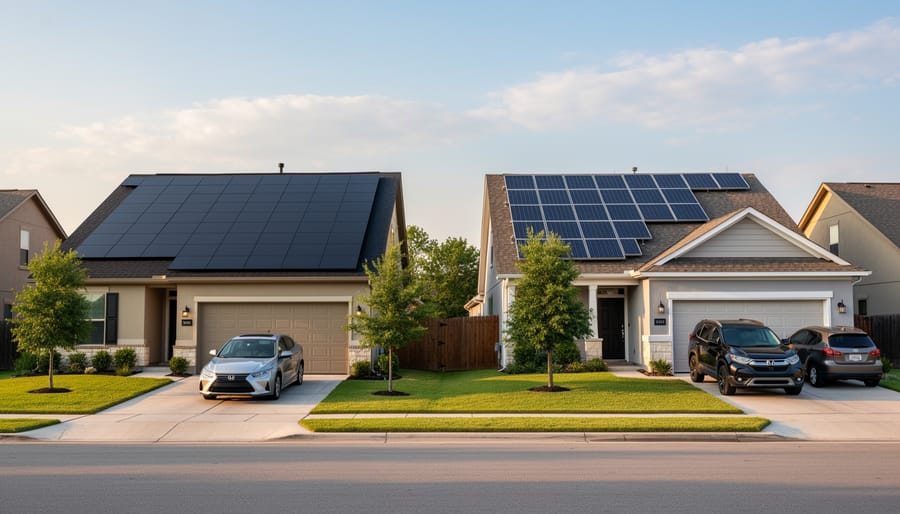
Solar shingles offer a remarkably sleek, integrated appearance that many homeowners find appealing. These photovoltaic tiles blend seamlessly with your existing roof, creating a uniform look that’s difficult to distinguish from traditional roofing materials at street level. If you value a streamlined, modern aesthetic or live in a neighborhood where maintaining architectural harmony is important, solar shingles might be your best choice.
Traditional solar panels, on the other hand, are more visible and sit noticeably above your roofline. While panel designs have improved considerably over the years, they still create a distinct visual statement. Some homeowners embrace this look as a badge of environmental responsibility, while others find it less appealing for their home’s design.
Neighborhood considerations can significantly impact your decision. Many homeowners associations have strict guidelines about roof aesthetics, and some communities even restrict or prohibit visible solar installations. Solar shingles typically face fewer objections from HOAs due to their discreet appearance. Before making your choice, check your local regulations and HOA requirements to avoid costly surprises.
Resale value is another aesthetic consideration worth noting. While both options can increase home value through energy savings and sustainability appeal, solar shingles may have an edge in communities where curb appeal is paramount. Prospective buyers often view integrated solar shingles as a premium feature rather than an add-on, potentially broadening your pool of interested buyers when it’s time to sell.
Energy Efficiency and Performance
When it comes to power generation, traditional solar panels generally have the edge over photovoltaic shingles. Standard solar panels typically achieve efficiency ratings between 18-22%, while solar shingles usually range from 14-18%. This means that for the same roof area, conventional panels will produce more electricity. However, this doesn’t tell the complete story.
The efficiency gap matters most when roof space is limited. If you have a smaller roof, traditional panels might be your best bet to maximize energy production. But if you have ample roof area, solar shingles can generate enough power to meet your household needs by simply covering more surface area. Many homeowners successfully power their entire homes with photovoltaic shingles.
Both systems perform well in various weather conditions, though there are some differences worth noting. Solar panels are typically mounted with air circulation underneath, which helps them stay cooler and maintain efficiency on hot days. Solar shingles sit flush against your roof, which can lead to slightly higher temperatures and marginally reduced output during heat waves. That said, both technologies work on cloudy days, generating 10-25% of their typical output depending on cloud thickness.
A common misconception is that solar shingles are significantly less effective than panels. While solar efficiency ratings do favor traditional panels, the real-world difference often amounts to requiring 10-20% more roof coverage with shingles to achieve the same energy production. For most homes with adequate roof space, this isn’t a dealbreaker.
Both systems benefit from proper installation and optimal roof orientation. South-facing roofs with minimal shade provide the best results regardless of which technology you choose. The key is setting realistic expectations: work with your installer to calculate your specific energy needs and ensure your chosen system is appropriately sized for your household consumption patterns and available roof space.
Installation Process and Timeline
Understanding the installation process helps you plan your solar journey more effectively. Both photovoltaic shingles and traditional solar panels follow different paths, each with unique considerations.
Traditional solar panels typically offer a faster, more straightforward installation. Most solar panel installation projects take just one to three days for an average-sized home. The process involves mounting aluminum rails onto your existing roof, then attaching the panels to these rails. Your current roof doesn’t need replacement unless it’s already nearing the end of its lifespan. This means less disruption to your daily routine and quicker access to clean energy.
Photovoltaic shingles require a more involved approach since they integrate directly into your roof structure. If you’re building a new home or already planning a roof replacement, the timing works perfectly. The installation process takes one to two weeks because installers are essentially building your entire roof while incorporating the solar technology. Each shingle must be carefully positioned and connected, requiring specialized roofing expertise alongside electrical knowledge.
The complexity difference impacts costs too. While solar panels need experienced installers, they don’t require complete roof reconstruction. Photovoltaic shingles demand contractors skilled in both roofing and solar technology, which can be harder to find in some areas.
Think about your situation: if your roof is in good condition and you want solar energy soon, traditional panels offer the quickest path. However, if you’re building new or replacing an aging roof anyway, photovoltaic shingles let you tackle both projects simultaneously, creating a seamlessly sustainable home from the ground up.
Durability, Maintenance, and Lifespan
When choosing between photovoltaic shingles and traditional solar panels, understanding their durability and long-term performance helps you make a wise investment in your home’s sustainable future.
Traditional solar panels typically come with robust warranties, often 25 years for performance and 10-15 years for manufacturing defects. You can expect them to produce at least 80-85% of their original output after 25 years. Photovoltaic shingles offer similar performance warranties, usually 25 years, plus they include roofing warranties that protect against leaks and weather damage, giving you dual coverage. This combined protection can be particularly valuable since they serve as both your roof and energy system.
Maintenance for both options is refreshingly minimal. Solar panels need occasional cleaning to remove dust, leaves, and debris that can reduce efficiency. Since they sit above your roof, accessing and cleaning them is straightforward. Photovoltaic shingles require similar cleaning but may trap debris more easily in the gaps between shingles, though regular rain often handles this naturally.
Here’s where practical considerations matter: if a traditional solar panel fails or gets damaged, you can replace individual panels relatively easily without disturbing your entire roof. With photovoltaic shingles, repairs can be more complex since they’re integrated into your roofing system. Removing and replacing individual shingles may require professional roofing expertise, potentially increasing repair costs.
Both systems are built to withstand harsh weather, including hail, wind, and snow. The sustainability benefit extends beyond energy production because both options reduce your carbon footprint for decades with minimal ongoing maintenance. Your choice might depend on whether you prioritize easier repairs with panels or integrated aesthetics with shingles, knowing both deliver long-lasting, eco-friendly performance for your home.
Which Option Is Right for Your Home?
When Solar Shingles Make the Most Sense
Photovoltaic shingles shine brightest in specific situations where their unique advantages truly matter. If you’re planning new construction or already facing a roof replacement, the timing couldn’t be better. Since you need a new roof anyway, you’re essentially getting solar power while checking off a necessary home improvement. This dual-purpose approach makes the higher upfront cost much easier to justify.
Aesthetics play a significant role too. For homeowners who value curb appeal or live in historic neighborhoods where traditional solar panels might look out of place, photovoltaic shingles offer an elegant solution. They blend seamlessly with your roofline, maintaining your home’s architectural character while still embracing clean energy. This makes them particularly appealing in communities with strict homeowners association guidelines that frown upon visible solar installations.
Location matters as well. If you’re building in areas with specific design requirements or architectural review boards, the streamlined appearance of solar shingles often receives approval more readily than bulky panel arrays. They’re also ideal for those who prioritize a customized, integrated look over maximum energy output.
The sustainability benefits extend beyond just generating clean electricity. By combining roofing and solar into one product, you’re reducing material waste and simplifying your home’s energy system. While photovoltaic shingles may cost more initially, these scenarios transform them from a premium option into a smart, practical investment that aligns with both your aesthetic vision and environmental values.
When Traditional Panels Are the Better Choice
Traditional solar panels remain the smart choice for many homeowners, particularly when practical considerations take priority. If your roof is relatively new or in excellent condition with at least 15-20 years of life remaining, conventional panels make perfect sense. There’s simply no reason to replace a perfectly good roof just to integrate solar shingles.
Budget-conscious homeowners will appreciate that traditional panels typically cost 30-50% less than photovoltaic shingles when comparing similar system sizes. This lower upfront investment means faster payback periods and quicker returns on your sustainable energy journey. The savings can be redirected toward adding battery storage or increasing your system size for even greater environmental impact.
When maximizing power output is your priority, conventional panels deliver more energy per square foot. Their adjustable mounting systems allow installers to optimize the angle for your location’s sun exposure, something flat-mounted solar shingles can’t match. This efficiency advantage translates to more clean energy production and greater offset of your carbon footprint.
Future flexibility is another consideration. Traditional panels are incredibly easy to expand, repair, or upgrade as your needs change or technology improves. Individual panels can be replaced without affecting your entire system, and adding capacity is straightforward. This adaptability makes conventional panels ideal for homeowners who value long-term customization options.
For existing homes where aesthetics aren’t the primary concern, traditional solar panels offer a proven, cost-effective path toward energy independence and environmental responsibility.
When it comes to choosing between photovoltaic shingles and solar panels, there’s no one-size-fits-all answer. The right choice for your home depends entirely on your unique circumstances, priorities, and budget.
If aesthetics and seamless integration matter most to you, and you’re planning a roof replacement or new construction, photovoltaic shingles might be your ideal match. They offer that sleek, modern look while protecting your home and generating clean energy. On the other hand, if maximizing energy production and getting the best return on investment are your top priorities, traditional solar panels typically deliver more power per dollar spent.
Before making your decision, take time to assess your specific needs. Consider your roof’s condition, your budget constraints, how long you plan to stay in your home, and what aesthetic preferences matter to you. Getting multiple quotes from reputable installers for both options will give you a clearer picture of real-world costs and benefits for your particular situation.
Remember, whichever path you choose, you’re making a meaningful commitment to sustainability. Both photovoltaic shingles and solar panels significantly reduce your carbon footprint, decrease reliance on fossil fuels, and contribute to a cleaner future. The fact that you’re exploring solar energy options means you’re already part of the solution. Whether your roof features integrated shingles or traditional panels, you’ll be harnessing the sun’s power and making a positive environmental impact for years to come.