
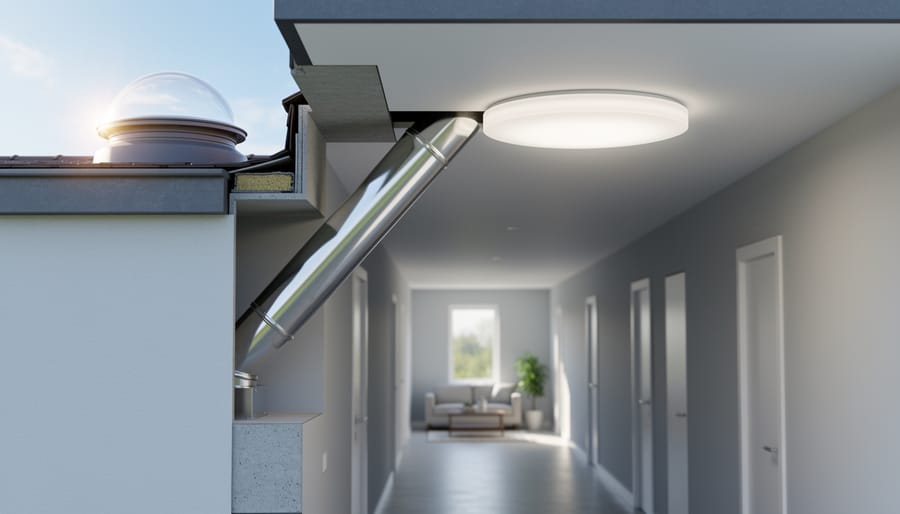
A primary solar daylighting system is the complete core assembly that captures, channels, and distributes natural sunlight into a building’s interior spaces. This includes the rooftop dome or lens that gathers sunlight, the reflective tube that transfers it, and the ceiling diffuser that disperses it evenly throughout the room. Unlike optional accessories such as dimming controls or light kits, the primary system represents the essential components needed to bring daylight indoors without electricity.
Understanding what makes up a primary system matters because these features directly determine how much natural light reaches your space, how efficiently it performs across seasons, and what energy savings you’ll achieve. The dome’s UV resistance, the tube’s reflective coating quality, and the diffuser’s light distribution pattern all influence whether you’ll reduce electric lighting costs by 30% or 60% in a given room.
Homeowners planning a sustainable renovation and architects specifying daylighting solutions need to know which features come standard and which are add-ons. This knowledge helps you compare products accurately, budget correctly, and choose systems that match your climate and building design. A well-designed primary system can deliver free, full-spectrum daylight for decades with minimal maintenance, transforming dim hallways and windowless spaces into bright, energy-efficient areas. The following sections break down exactly how these systems work, what each component does, and which features deliver the best performance for your investment.
What a Primary System Means in Solar Daylighting
In solar daylighting, a primary system is the core assembly that collects natural sunlight and channels it into your home. Think of it as the essential machinery that makes daylighting possible: without the primary system, there’s no light delivery. It’s a complete, integrated package designed to capture sunlight at the roof level, transport it through your attic or ceiling space, and release it into interior rooms.
The primary system includes three fundamental elements working together. The roof-mounted collection component captures sunlight. The reflective pathway transports that light from outside to inside. The ceiling-mounted distribution fixture disperses the light throughout the room. These aren’t separate add-ons you piece together later; they’re the heart of the installation.
Understanding a few key terms helps clarify what primary systems do:
- Primary System
- The main light-capturing and light-transmitting apparatus of a solar daylighting installation, consisting of the dome, reflective tubing, and diffuser working as an integrated unit.
- Solar Daylighting
- The practice of using specialized systems to bring natural sunlight into interior spaces without windows, reducing reliance on electric lighting during daylight hours.
- Light Capture
- The process by which a roof-mounted dome or glazing collects and funnels incoming sunlight into the reflective tubing system.
- Light Transmission
- The movement of sunlight through highly reflective tubes or shafts that channel brightness from the roof to the ceiling with minimal light loss.
- Secondary Components
- Optional add-ons and accessories such as dimmer controls, extension collars, or decorative trim rings that enhance but are not essential to the basic daylighting function.
What makes a primary system “primary” is that it does the core job on its own. Secondary components enhance convenience, control, or aesthetics, but the primary system delivers natural light without them. You can install a primary system and have fully functional daylighting immediately. Controls, specialized mounting hardware for unusual roof angles, or decorative elements come later if you want them. This distinction matters when planning your budget and understanding what you’re actually paying for: the primary system is the investment that changes how your space feels and performs.
How Primary Systems Work
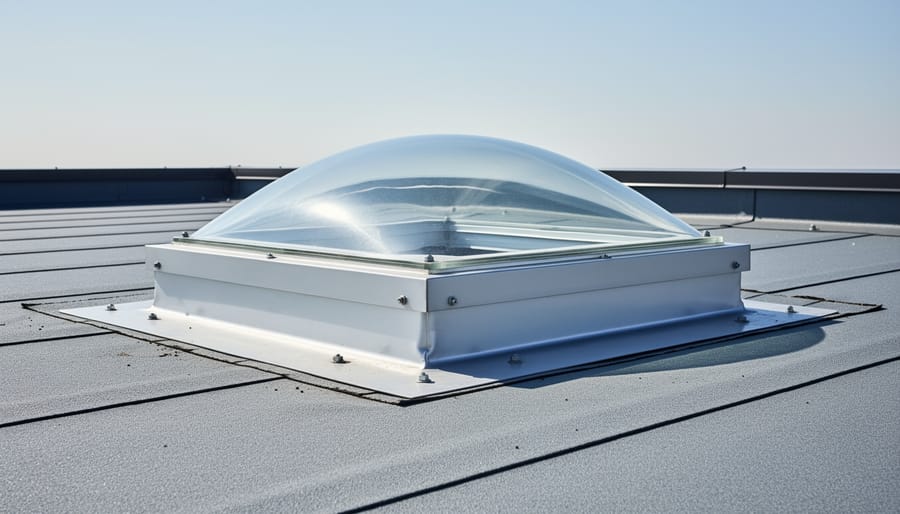
A primary system captures sunlight at the roof level and channels it down into your home through a completely passive process, no electricity, no moving parts, just smart design and reflective materials working together.
The journey begins with the dome or collection point mounted on your roof. This clear, weather-resistant component acts as the entry point for sunlight, gathering rays throughout the day as the sun moves across the sky. The dome’s curved shape and positioning allow it to capture light from multiple angles, maximizing collection even during early morning and late afternoon hours when the sun sits lower on the horizon.
Once sunlight enters through the dome, it travels down a highly reflective tube or light channel. This tubing features a specialized interior coating, typically achieving 95-99% reflectivity, that bounces light particles downward with minimal loss. Think of it like a mirror-lined tunnel: light enters at the top and bounces efficiently along the walls until it reaches the bottom. The tube’s reflective quality matters enormously here. A tube with 99% reflectivity delivers substantially more light to your room than one rated at 90%, especially over longer distances between roof and ceiling.
The tube can navigate around obstacles in your attic or ceiling space. Flexible configurations allow installers to work around beams, ductwork, and structural elements, though straight runs always perform better. Professional installation tools ensure proper alignment and sealing at connection points to prevent light leakage and maintain system efficiency.
At the ceiling level, light exits through a diffuser, a translucent fixture that spreads illumination evenly across the room. The diffuser transforms the concentrated beam of light traveling through the tube into soft, natural ambient lighting that mimics the quality of traditional windows.
This entire process happens continuously during daylight hours without consuming energy, making primary systems a truly sustainable lighting solution that reduces reliance on electric fixtures and lowers your home’s overall energy footprint.
Core Components of Primary Systems
Light Collection: Domes and Glazing
The dome or glazing sits atop your roof, acting as the entry point for sunlight into the primary system. This transparent cap is engineered to maximize light capture while withstanding whatever nature throws at it, hail, heavy rain, UV rays, and temperature extremes.
Most domes use either acrylic or polycarbonate materials. Acrylic offers exceptional clarity and light transmission, typically around 90%, making it popular for residential installations where maximum brightness matters. Polycarbonate brings superior impact resistance, standing up to falling branches and severe weather without cracking. Some manufacturers offer multi-wall polycarbonate options that add insulation value while still transmitting plenty of light.
UV protection comes built into quality domes, filtering harmful rays that can fade furniture and flooring while letting the beneficial visible spectrum through. Weather sealing features, rubberized gaskets, reinforced bases, and aerodynamic shapes, ensure the dome won’t leak or lift in high winds.
Customization matters here. Flat roof applications might use a low-profile dome, while steep pitches need angled mounting collars to capture sunlight effectively. Climate-specific options include tinted domes for intense sun regions and insulated models for cold zones where thermal performance counts.
Light Transmission: Reflective Tubing
The reflective tube forms the critical pathway between your roof and interior space, acting as a light highway that delivers sunlight with minimal loss. These tubes feature a specialized mirror-like coating on their interior surface, achieving reflectivity ratings between 95% and 99%. This means nearly all captured sunlight reaches your room rather than being absorbed along the way.
Tube diameter directly affects light output. Common residential sizes range from 10 to 21 inches, with larger diameters delivering more lumens but requiring more attic space and a bigger roof opening. A 14-inch tube typically provides enough illumination for a bathroom or walk-in closet, while kitchens and living areas benefit from 18 to 21-inch options.
Installation scenarios determine whether you need rigid or flexible tubing. Rigid tubes offer the highest reflectivity and work perfectly when you have a straight shot from roof to ceiling. Flexible tubes, while slightly less efficient due to their corrugated interior, navigate around obstacles like joists, ducts, and rafters. Many installations combine both types: rigid sections where possible, with flexible elbows for tight turns. This adaptability makes primary systems viable in homes where traditional skylights would fail.
Light Distribution: Diffusers and Lenses
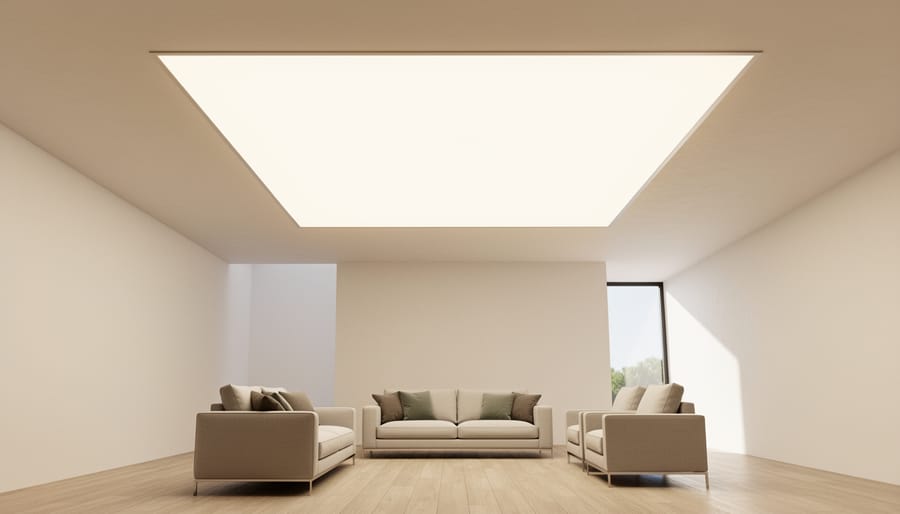
The diffuser is what you see from inside the room, the visible ceiling fixture that transforms concentrated sunlight from the tube into soft, even illumination. It’s the final component in the primary system chain, and its design directly affects both light quality and room aesthetics.
Diffusers come in several styles. Prismatic lenses use textured patterns to scatter light broadly, creating bright, uniform coverage ideal for workspaces and kitchens. Frosted diffusers produce a gentler, more diffused glow that works well in bedrooms and living areas where softer ambiance matters. Decorative options include dome-shaped, square, or round designs that complement different interior styles, contemporary, traditional, or minimalist.
The light spread pattern matters too. Some diffusers concentrate light in a narrow beam for task lighting, while others distribute it widely across large areas. Most quality diffusers achieve 360-degree light distribution, eliminating harsh shadows and dark corners.
Customization extends to finish and trim colors. White diffusers blend seamlessly with standard ceilings, while metallic or wood-grain trims match specific design schemes. This flexibility lets primary systems enhance interiors rather than disrupt them, delivering natural light that feels integrated into your home’s character.
Primary Systems Features That Matter Most
When choosing a solar daylighting system, a few critical features separate high-performing primary systems from mediocre ones. Light output efficiency sits at the top: the best systems boast reflectivity ratings of 98% or higher in their tubing, meaning nearly all captured sunlight reaches your interior spaces instead of being lost to absorption. This translates directly into brighter rooms and greater energy savings, making efficiency a cornerstone of any quality installation.
Weather sealing and insulation properties matter just as much for long-term performance. Premium primary systems include multiple sealing layers at the roof penetration point to prevent leaks, along with insulated flashing kits that maintain your home’s thermal envelope. Without proper insulation, a daylighting system can become a source of heat loss in winter or unwanted heat gain in summer, undermining the very sustainability goals it’s meant to support. Look for systems rated for extreme weather conditions and temperature swings if you live in a challenging climate.
When evaluating options, prioritize these essential features:
- High reflectivity ratings (98-99%) for maximum light transmission
- Weatherproof seals with multiple barrier layers
- Thermal insulation to prevent energy loss
- UV protection to prevent yellowing and material degradation
- Flexible installation options for various roof pitches and ceiling heights
- Maintenance-free operation with self-cleaning dome surfaces
- Customizable finishes to match interior aesthetics
- Comprehensive warranty coverage (typically 10-20 years)
Adaptability proves crucial for real-world installations. Quality systems offer extension tubes, angled adapters, and adjustable flanges that work with steep roofs, flat roofs, cathedral ceilings, and attic spaces of varying depths. This flexibility means you’re not locked into a one-size-fits-all solution.
The sustainability payoff from these features is substantial. A well-designed primary system can illuminate a room for 8-10 hours daily without electricity, cutting lighting costs year-round. Over a system’s 20-year lifespan, the energy savings often rival what you’d see in a solar savings comparison for photovoltaic installations, all while improving indoor air quality and occupant well-being through natural light exposure.
Common Applications for Primary Systems
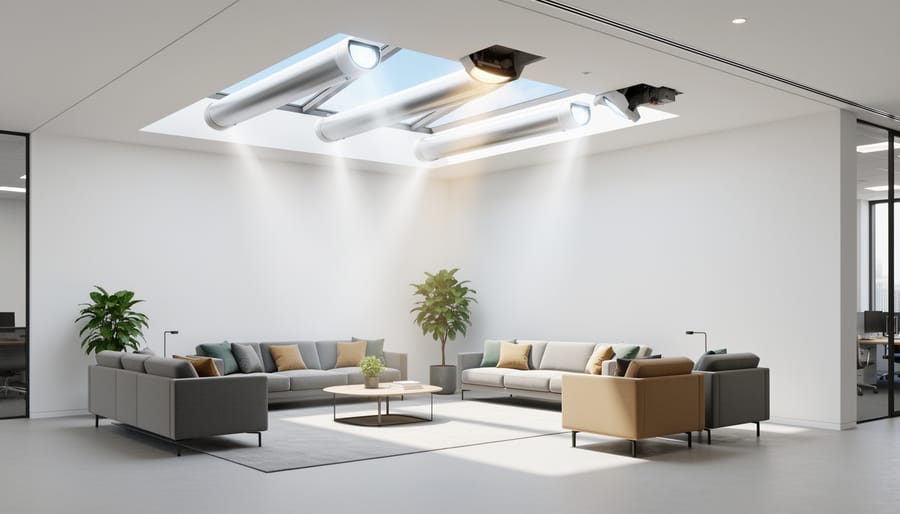
Primary systems shine in spaces where natural light traditionally struggles to reach. Interior hallways, bathrooms, walk-in closets, and laundry rooms, any area without exterior walls, transform when equipped with solar daylighting. These systems eliminate the need for midday artificial lighting in these zones, cutting energy use while creating brighter, more inviting environments. Kitchens and home offices benefit from the consistent, shadow-free illumination that primary systems deliver, making tasks easier and reducing eye strain.
Commercial settings find equal value. Office corridors, retail stockrooms, warehouse mezzanines, and industrial break areas gain reliable daylight without sacrificing wall space or structural integrity. The systems work particularly well in retrofit scenarios where adding traditional windows would require costly structural modifications. New construction projects incorporate primary systems into green building plans, earning sustainability credits while reducing long-term operating costs.
The beauty lies in adaptability. A century-old Victorian can accept the same primary system technology as a contemporary prefab, each installation customized to roof type, pitch, and ceiling height. Whether you’re building from scratch or upgrading an existing property, primary systems fit without dictating design choices. Proper installation with quality weatherproofing tools ensures decades of maintenance-free operation across all applications.
Frequently Asked Questions
How much natural light does a primary system actually provide?
A typical residential primary system can deliver the equivalent of 200-300 watts of incandescent lighting on a sunny day, enough to fully illuminate a room up to 150 square feet. Light output varies with tube diameter, reflectivity, and time of day, but even on overcast days most systems provide useful ambient lighting that reduces or eliminates the need for artificial light during daytime hours.
Can primary systems work in cloudy climates?
Yes, primary systems capture and transmit diffuse daylight even under cloud cover, though output is lower than in direct sun. Homes in the Pacific Northwest and similar regions still benefit from significant natural light throughout the day, and the passive nature of these systems means they contribute year-round without energy costs.
Do primary systems require electricity?
No, primary systems operate entirely passively with no electrical components, motors, or power consumption. They channel sunlight mechanically through reflective materials, which means zero operating costs and complete independence from the electrical grid.
How do primary systems compare to traditional skylights?
Primary systems typically offer easier installation, better insulation, less heat gain, and more flexible placement since reflective tubing can route light to rooms far from the roofline. Traditional skylights provide direct views of the sky but require structural framing, can create thermal inefficiencies, and are limited to top-floor rooms directly under the roof.
What maintenance do primary systems need?
Maintenance is minimal, usually limited to wiping the exterior dome clean once or twice a year to remove dust and debris. The sealed design prevents moisture and dirt from entering the reflective tubing, and quality systems are built to last decades with no part replacement needed.
When weighing cost vs benefits for different daylighting approaches, primary systems stand out for their simplicity and longevity. The upfront investment is typically lower than a traditional skylight installation, and the absence of ongoing energy costs or maintenance expenses makes them economically attractive over the system’s lifespan. Understanding these practical considerations helps homeowners and builders make informed decisions that align with both immediate needs and long-term sustainability goals.
Understanding what a primary system is and how it functions gives you a solid foundation for making informed choices about solar daylighting. When you know what components matter, from the dome that captures sunlight to the reflective tubing that channels it and the diffuser that spreads it evenly, you can better evaluate which features will serve your home best.
The right primary system can brighten interior spaces that traditional windows can’t reach, cut down on daytime electricity use, and create healthier, more comfortable living environments. Whether you’re building new or upgrading an existing space, these systems adapt to different roof configurations, ceiling heights, and design preferences without requiring ongoing energy consumption.
As you consider your options, think about which rooms would benefit most from consistent natural light and how that aligns with your sustainability goals. Quality primary systems are built to last, require minimal upkeep, and deliver measurable energy savings year after year. Exploring what’s available for your specific situation is a worthwhile step toward a brighter, more eco-friendly home.