
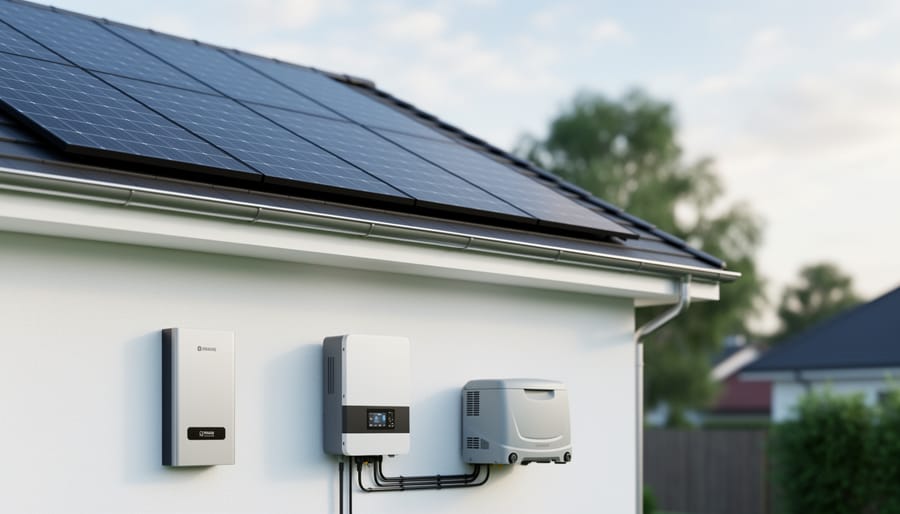
When you invest in solar panels, you need reliable backup systems to keep your home powered when the sun isn’t shining or demand exceeds what your panels produce. The three essential secondary sources that work alongside residential solar installations are battery storage systems, grid connection, and backup generators. Each serves a distinct purpose: batteries store excess solar energy for later use, grid connection provides a two-way power exchange with your utility company, and generators offer emergency power during extended outages.
Choosing the right combination of these secondary sources depends on your goals. If energy independence ranks high on your list, a robust battery system paired with a backup generator gives you maximum autonomy. Homeowners who want simplicity and cost-effectiveness often rely on grid connection as their primary backup, using net metering to balance their energy needs throughout the year. Those in areas with frequent power outages typically add generators to their setup for peace of mind.
The beauty of modern solar systems lies in their flexibility. You can start with one secondary source and expand over time as your needs change or your budget allows. Understanding how these three options work together helps you design a system that matches your household’s energy patterns, your commitment to sustainability, and your budget. This guide breaks down each secondary source, explains how it integrates with your solar panels, and offers practical advice for building the backup configuration that works best for your home.
What Are Secondary Sources in Solar Systems?
When you install solar equipment like skylights or attic fans, those products form your primary system, they capture sunlight and convert it directly into usable energy or natural light. But what happens when the sun isn’t shining, or when your primary system can’t meet all your energy needs? That’s where secondary sources come in.
Secondary sources are backup or supplementary power systems that work alongside your primary solar equipment to ensure consistent performance regardless of weather conditions or time of day. Think of them as your safety net. While your primary solar daylighting system does the heavy lifting during daylight hours, secondary sources kick in when solar generation drops or stops entirely.
- Battery Storage
- A rechargeable system that captures excess solar energy during peak production hours and releases it when needed, typically at night or during cloudy periods.
- Grid Connection
- A tie to your local utility network that supplies power when your solar system can’t meet demand and can store excess energy through net metering programs.
- Backup Generator
- A fuel-powered or eco-friendly generator that provides emergency power during extended periods of low solar production or grid outages.
These secondary sources integrate seamlessly with solar-powered attic fans and daylighting systems by filling energy gaps without compromising your home’s sustainability goals. A properly configured secondary source keeps your attic ventilation running smoothly during overcast weeks and ensures your electric lights have power when natural daylighting isn’t sufficient.
The reliability of your entire solar setup depends on choosing the right secondary configuration. Without backup support, you’re at the mercy of weather patterns and daily solar cycles. With the right secondary sources in place, you gain energy security while maximizing the return on your solar investment.
Secondary Source #1: Battery Backup Systems
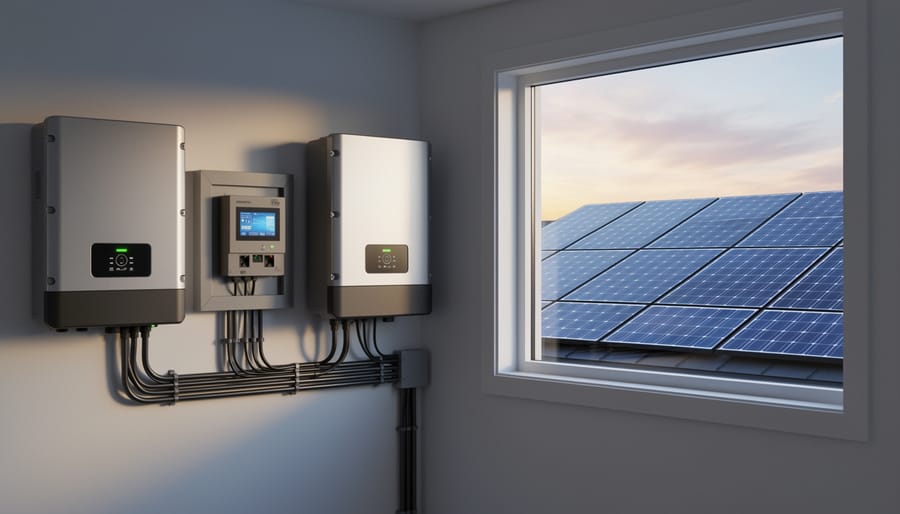
When Battery Backup Makes Sense for Your Home
Battery backup systems aren’t essential for every solar installation, but they shine in specific situations. Understanding when they make sense can save you from overpaying for unnecessary capacity or missing out on genuine benefits.
If you live in an area prone to frequent power outages, a battery system delivers peace of mind beyond what grid connection alone provides. Even brief interruptions can spoil refrigerated food, disrupt home offices, or affect medical equipment. Batteries keep critical loads running seamlessly when the grid fails.
Climate plays a major role too. Homes in regions with strong net metering policies might not need batteries, since the grid effectively serves as your storage. However, if your utility offers poor buyback rates or has time-of-use pricing, storing solar energy for evening use saves money directly.
Consider your daily energy patterns. Families who consume most electricity after sunset, when solar panels produce nothing, benefit substantially from stored daytime energy. Conversely, if you’re rarely home during the day and use minimal power at night, grid connection might suffice.
Battery systems also appeal to homeowners prioritizing energy independence and resilience during natural disasters. In hurricane or wildfire zones, extended outages make self-sufficient power invaluable.
Start by reviewing your utility bill for time-of-use charges and outage frequency in your area. Calculate whether peak-hour savings or backup security justify the upfront investment for your household’s specific circumstances.
Secondary Source #2: Grid Connection as a Backup Source
Hybrid Approaches for Maximum Flexibility
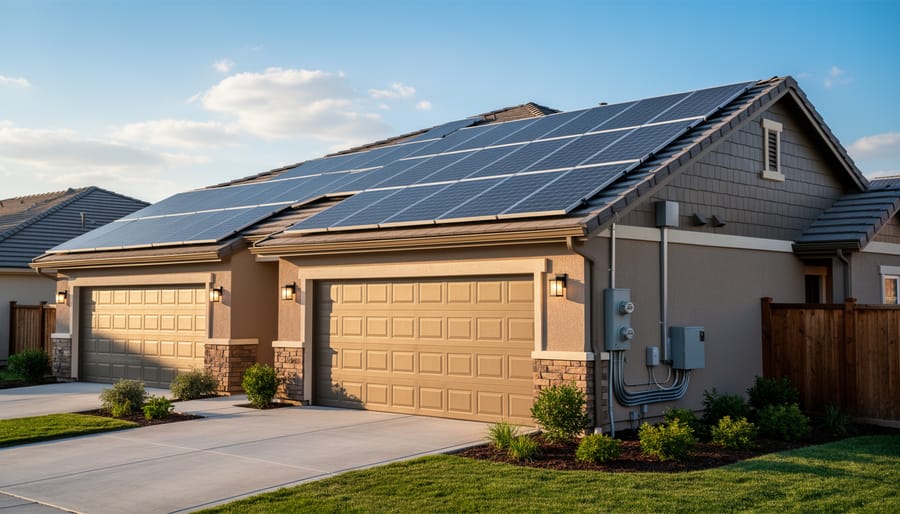
Combining grid connection with battery storage creates a powerful hybrid system that delivers both energy security and financial flexibility. This approach lets you store solar energy in batteries while maintaining utility access as a backup, giving you multiple layers of protection against power disruptions.
In a hybrid setup, your batteries handle most backup needs during brief outages or peak-rate periods. When batteries run low during extended cloudy weather, the grid seamlessly takes over. This configuration means you can size your battery bank more conservatively than if you were going completely off-grid, reducing upfront costs while maintaining reliability.
The real financial advantage comes from strategic energy management. During sunny periods, excess solar generation charges your batteries first. Once batteries are full, surplus power exports to the grid through net metering, earning you credits. When electricity rates peak in the evening, you draw from your batteries instead of buying expensive grid power. Your grid connection serves as insurance rather than your primary power source.
Modern hybrid inverters make this coordination automatic. They monitor solar production, battery levels, grid rates, and home demand simultaneously, optimizing when to store, export, or draw power. You get maximum value from your solar investment without sacrificing convenience.
For homes with solar daylighting systems and attic fans, this hybrid approach ensures all components maintain optimal performance regardless of weather conditions or time of day.
Secondary Source #3: Generator Integration
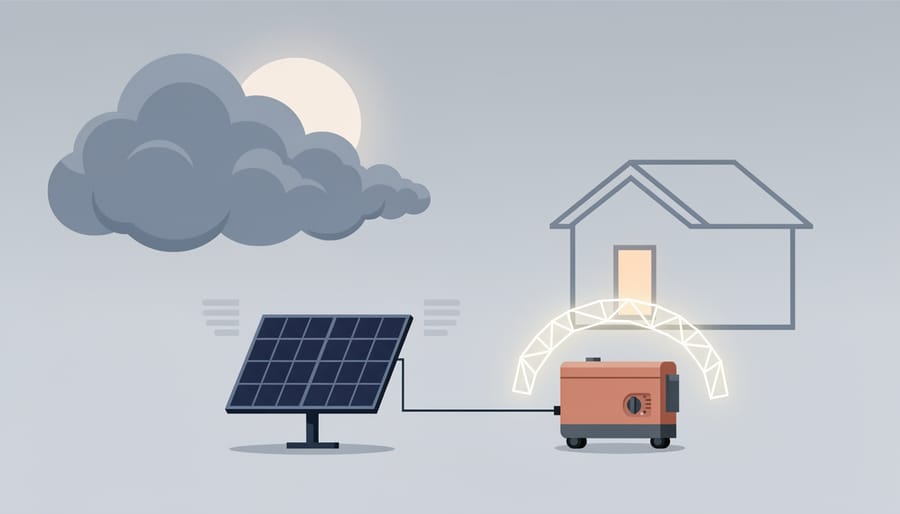
When prolonged cloudy weather settles in or grid outages coincide with depleted battery reserves, a backup generator provides a third layer of energy security for solar-equipped homes. Modern generators, especially eco-friendly models, fit naturally into sustainable energy strategies without undermining your environmental goals.
Generators serve as your tertiary support system, activating only when both solar production and stored battery power fall short. This tiered approach means you’re not burning fuel daily, the generator runs sparingly, typically during multi-day storms or regional blackouts when other sources can’t keep up with essential loads. For homes in areas prone to extended periods of heavy cloud cover or frequent grid instability, this backup layer offers genuine peace of mind.
Sizing your generator correctly prevents waste and ensures reliability. Calculate your home’s essential loads, refrigeration, heating systems, lighting, medical equipment, and choose a generator rated for 20-30% above that total. Oversizing means unnecessary fuel consumption and higher upfront costs; undersizing leaves critical systems without power when you need them most.
Fuel choices matter for sustainability. Propane and natural gas generators produce fewer emissions than traditional gasoline models and integrate cleanly with existing home fuel lines. Some homeowners explore biofuel options or dual-fuel systems that accept multiple fuel types, increasing flexibility during supply disruptions.
The key is viewing your generator as emergency support, not a primary power source. When paired with robust solar daylighting systems and energy-efficient features like solar attic fans that reduce your baseline consumption, even a modest generator handles extended outages comfortably. This configuration balances genuine energy independence with responsible resource use, giving your sustainable home complete resilience against whatever weather or grid conditions arise.
Choosing the Right Secondary Source Configuration
Selecting the right secondary source configuration isn’t a one-size-fits-all decision. Your ideal setup depends on several interconnected factors that deserve careful consideration before you invest.
Start by analyzing your local climate patterns. Homes in consistently sunny regions might thrive with a smaller battery system, while properties in cloudier areas benefit from hybrid configurations combining grid connection with battery backup. Cold climates may require generator integration for winter reliability, just as choosing between solar shingles vs panels depends on your roof characteristics and aesthetic preferences.
Your energy consumption profile matters enormously. Review your utility bills for the past year to identify usage peaks and seasonal variations. Households with predictable, moderate consumption can usually manage with grid-tied systems plus modest battery storage. Heavy users or those with variable patterns need more robust configurations. Track when you use the most energy, if it’s after dark, battery capacity becomes crucial for offsetting evening consumption that your daylighting systems and attic fans can’t address.
| Secondary Source | Best For | Typical Investment | Key Customization Factor |
|---|---|---|---|
| Battery System | Energy independence seekers, frequent outages | $8,000, $15,000 | Storage capacity (kWh) |
| Grid Connection | Cost-conscious, reliable utility service | Minimal setup costs | Net metering availability |
| Generator Backup | Remote locations, extreme weather zones | $3,000, $10,000 | Fuel type and runtime |
Budget constraints naturally influence your decision, but think long-term. Grid-tied systems require minimal upfront investment but offer less independence. Battery systems cost more initially yet provide returns through energy arbitrage and outage protection. Generators sit in the middle, offering emergency coverage without daily operational benefits.
Your sustainability priorities should guide customization choices. If minimizing environmental impact tops your list, prioritize battery storage charged by your solar panels over fossil-fuel generators. Eco-conscious homeowners often start with grid connection for reliability, then add battery capacity as budgets allow, creating a phased approach to energy independence.
The right solar installation tools and proper system design ensure your secondary sources integrate seamlessly with existing solar equipment. Professional installers can assess your specific situation using a solar service tool buying guide approach, customizing configurations that balance your immediate needs with future expansion possibilities. Most homes benefit from starting simple and scaling up as requirements and budgets evolve.
Selecting the right secondary source configuration isn’t about adding complexity to your solar system, it’s about ensuring your investment works reliably year-round. Whether you choose battery backup for energy independence, grid connection for cost-effective reliability, or generator integration for ultimate security, each option strengthens your primary solar installation while aligning with your specific circumstances.
The beauty of modern solar systems lies in their flexibility. Your home’s climate, your family’s energy patterns, your budget, and your sustainability priorities all shape which secondary sources make the most sense. There’s no one-size-fits-all answer, and that’s actually a strength. A beach house facing hurricane season needs different backup solutions than a mountain home with consistent sunlight, and both can achieve excellent results with customized configurations.
As solar technology continues advancing and energy storage becomes more accessible, homeowners who thoughtfully design their secondary source setup today position themselves for greater energy independence tomorrow. The goal isn’t just keeping lights on during outages, it’s creating a resilient, efficient system that reduces your environmental footprint while giving you control over your energy future.